The NCAA Oversight Committees for Division I Women’s and Men’s Soccer published rule book changes for the 2026 season on Tuesday. Included were the addition of video challenges, an updated goalkeeper time-to-release rule to match international standards, and various other changes.
The video challenge rule was stated as follows:
In men's and women's soccer games when video review is used in the 2026-27 academic year, coaches can make two video challenges per game.
The Division I Men's Soccer Oversight Committee, Division I Women's Soccer Oversight Committee, and Division II and Division III Playing Rules Oversight Panel approved the rules changes.
Under the video review challenge rule, each coach can make a maximum of two challenges at any point in a game.
In the first 80 minutes of a game, officials can initiate video review only for clock issues and to see whether the ball crossed the goal line. In the final 10 minutes of regulation and overtime, officials can initiate video review on all allowable plays.
However, officials will not initiate video review in the last 10 minutes of regulation or overtime if a team still has challenges remaining.
The rationale for the rule change is to help the officials get the call right while maintaining the pace and flow of the game.
This is a welcome change in my opinion, though clarification is needed on whether a single team holding onto a single challenge can block the officials from initiating a review in the final 10 minutes and overtime.
The pace of play will be slowed somewhat with how uncommon video reviews had been previously, but the change should be easily managed. Games at Baylor consistently took right around two hours and that shouldn’t change more than 5-10 minutes in my estimation.
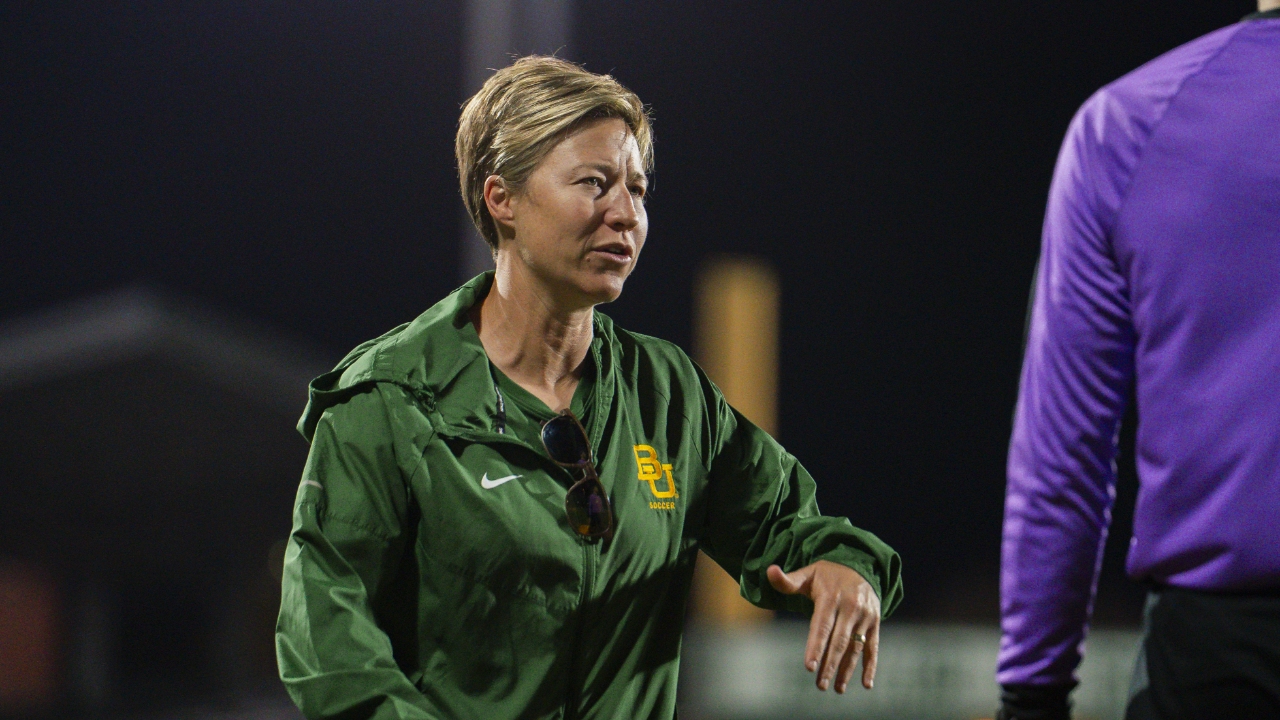
But how does Baylor head coach Michelle Lenard view the new rule?
“On the video challenges, I think the aim is to get big calls right without slowing the game too much. I don’t know how I feel about it. We will see, I guess. I suppose it’s nice to have some say over what is reviewed.”
The other major rule changes highlighted in the NCAA release were a change to substitutions and a change to the goalkeeper time-to-release rule.
Teams can now make substitutions any time the clock is stopped … This is already allowed in Division I men's games.
Now, all of college soccer follows the same guidelines on substitutions.
Similarly, the NCAA now aligns with international rules when it comes to how long the goalkeeper is allowed to retain possession of the ball.
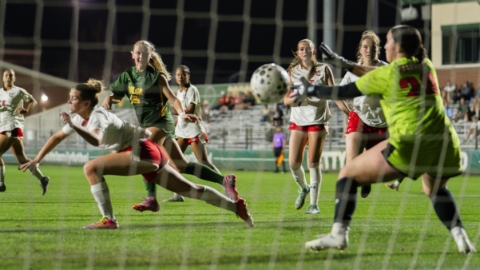
The time for goalkeepers to release the ball after gaining possession increases to eight seconds next season. Officials will make an accompanying visual signal for the final five seconds of the count.
If the goalkeeper doesn't release the ball within eight seconds, the opposing team will be awarded a corner kick.
This change aligns the NCAA with international rules.
Previously, goalkeepers had six seconds to release the ball after gaining possession, and if the ball wasn't released, the opposing team received an indirect free kick.
A welcome change to those who know the international standard and like consistency across all levels of Soccer. Why the NCAA “limited” it to six seconds in the first place, I’m not sure. They never really enforced it anyway, so perhaps there will be better enforcement now that the timing is more lenient? That is what Coach Lenard will be looking for when her team returns to action in August.
“The goalkeeper release rule is interesting. I understand the idea behind it, but I don’t think referees were enforcing this much before anyway. I hope they will start to enforce it now that the penalty is less severe … a corner kick rather than an indirect free kick. I’ve literally never seen that rule enforced in a game my entire career.”
There were 10 other rule changes in the NCAA release: